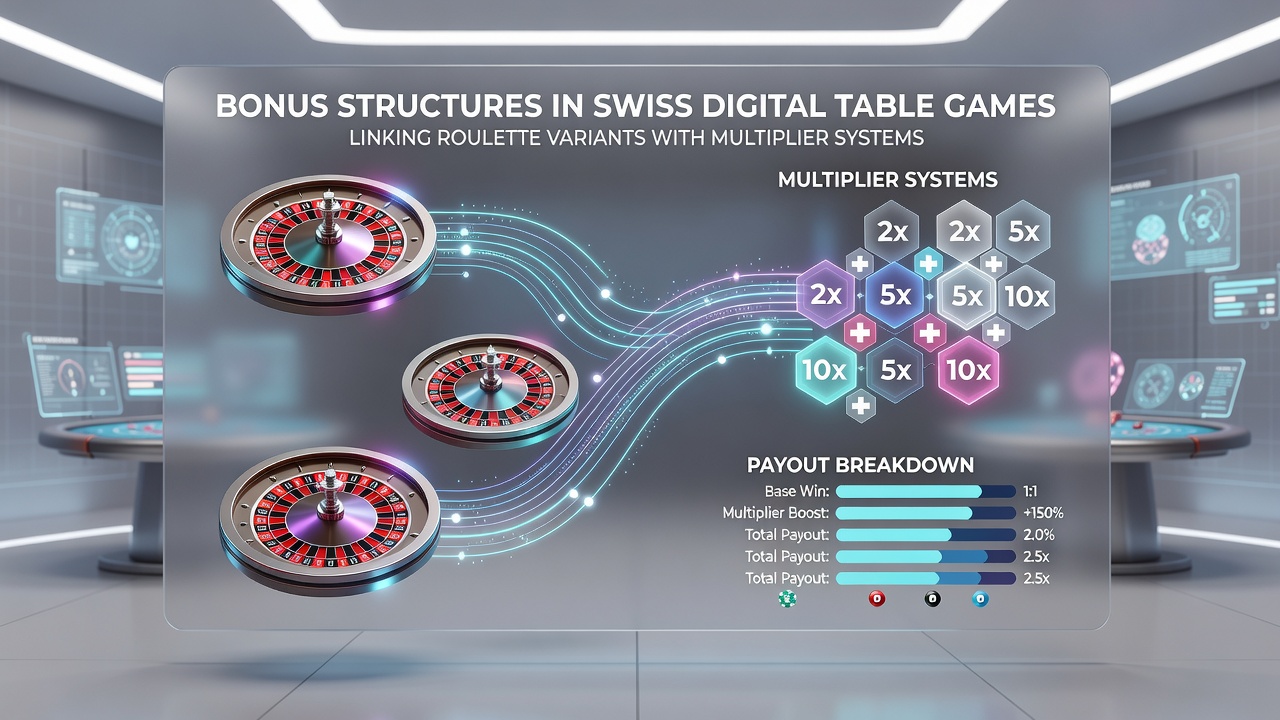
Bonus Structures in Swiss Digital Table Games: Linking Roulette Variants with Multiplier Systems
Alex Wagner · Aug 29, 2026
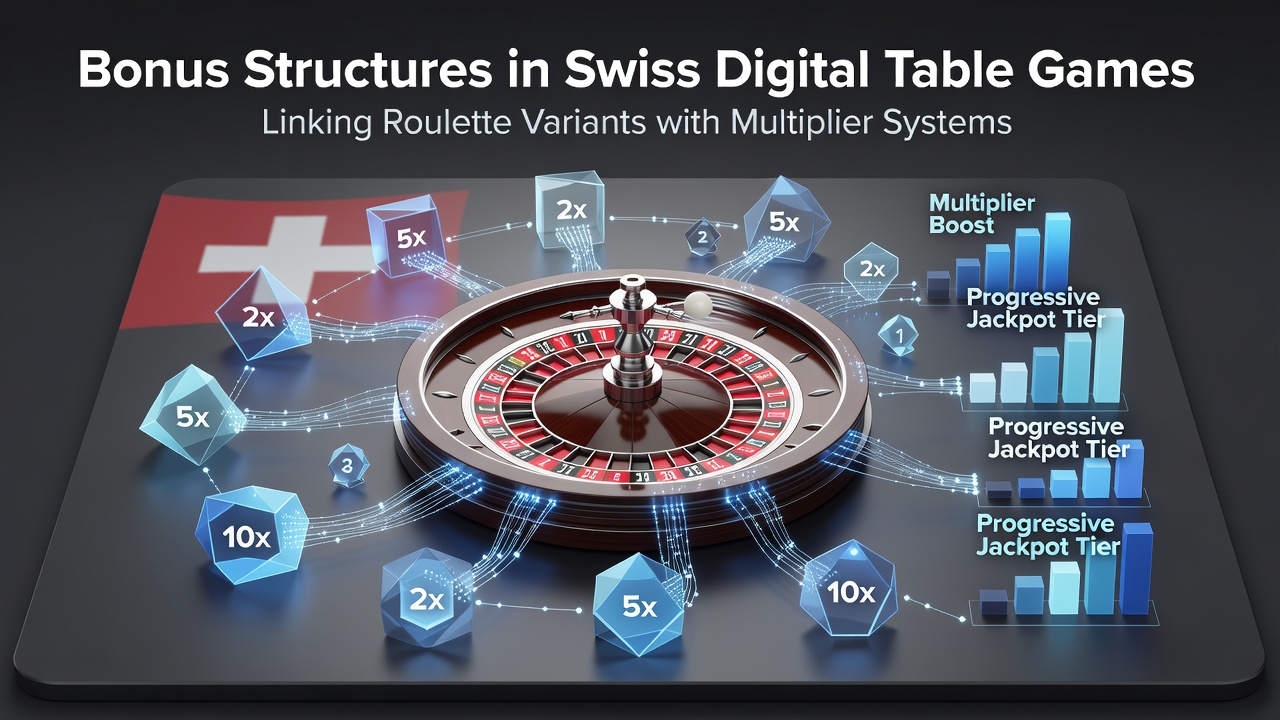
Bonus Structures in Swiss Digital Table Games: Linking Roulette Variants with Multiplier Systems
Swiss digital table games operate under the Federal Act on Games of Chance and Casinos, which sets clear rules for licensed operators offering roulette and related formats. Platforms must integrate bonus structures that tie directly into gameplay mechanics, particularly when multipliers activate on specific bets or wheel segments. Data from licensed providers shows that roulette variants such as European, French, and Lightning-style tables now incorporate multiplier systems that scale both base payouts and bonus contributions in real time. Operators track player activity through these linked systems, where multipliers range from 2x to 500x on individual numbers or sectors. Bonus structures reward consistent play by converting multiplier hits into additional wager credits or cashback percentages that apply only to table game rounds. Swiss regulatory filings indicate that such integrations increased average session duration by measurable margins between 2024 and 2025, as players chase successive multiplier triggers within a single bonus cycle.Roulette Variants and Their Core Mechanics
European roulette remains the dominant format on Swiss platforms because it features a single zero and a house edge of 2.7 percent, while French roulette adds the en prison and la partage rules that return half the stake on even-money bets when zero lands. Digital versions layer multiplier systems onto these foundations, randomly assigning values to pockets before each spin. Research from the Swiss Federal Gaming Board reveals that Lightning-style variants, which apply multipliers to up to five numbers per round, account for over 35 percent of table game volume on licensed sites as of mid-2025. These variants connect to bonus structures through contribution rates. Deposits matched under welcome offers typically allocate 100 percent of roulette wagers toward bonus release requirements, yet multipliers only count once the enhanced payout clears. Players therefore monitor both the base bet and any active multiplier to calculate effective progress toward wagering thresholds.Multiplier Integration with Bonus Frameworks
Bonus structures in Swiss digital environments often embed multiplier triggers as conditional rewards. A common model awards a fixed cash amount or free spins package once a player lands three consecutive multiplier hits above a set threshold during roulette sessions. The system records each multiplier separately, then aggregates them against the original bonus balance, ensuring compliance with maximum win caps set by the license terms. In August 2026, platform reports showed an uptick in hybrid bonus campaigns that combine deposit matches with multiplier-specific leaderboards. Participants earn leaderboard points exclusively from multiplier-enhanced roulette wins, and top positions receive additional credits that carry separate wagering conditions. Such campaigns rely on real-time data feeds that link the game server directly to the bonus engine, preventing manual overrides and maintaining audit trails required under Swiss oversight.